If you own acreage in Pound Ridge, it can be tempting to imagine one big, open backyard with every outdoor feature on your wish list. In reality, the most successful outdoor living spaces here usually begin with the land itself. When you understand how contour, drainage, tree cover, and wetlands shape your property, you can create outdoor areas that feel beautiful, practical, and well suited to the setting. Let’s dive in.
Start With the Land
Pound Ridge is defined by rolling hills, low rocky ridges, wetlands, and stream valleys. The town’s natural-resource materials also note that bedrock is often near the surface, which can affect grading, drainage, and where certain features make sense on your lot. You can see that same landscape character reflected in Ward Pound Ridge Reservation, where wooded terrain and natural contours are a central part of the experience.
For that reason, a strong outdoor plan in Pound Ridge usually works with the property instead of trying to flatten it into a conventional suburban yard. Rather than forcing one oversized lawn or patio, it often makes more sense to create a series of connected outdoor zones that fit the land naturally.
Build in Outdoor Zones
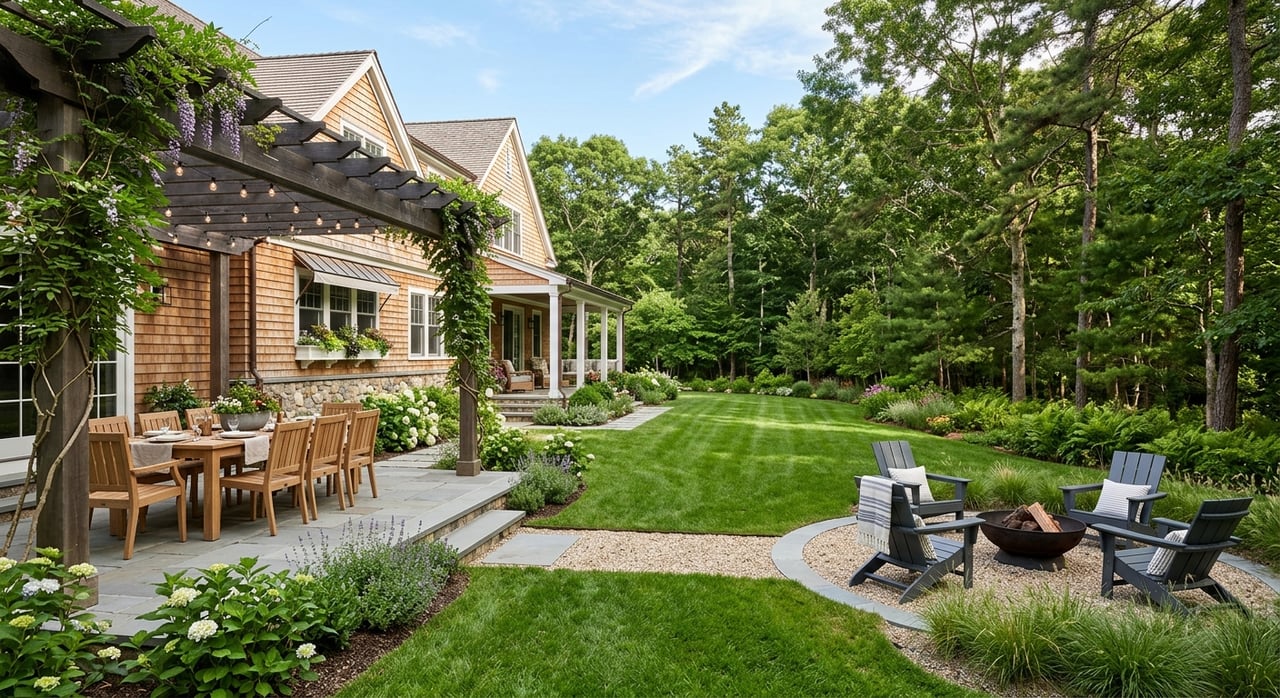
On larger lots, a simple layout often works best:
- A primary dining terrace near the house
- A secondary lounge or firepit area set a bit farther out
- A flatter lawn space for play or open use
- Paths that connect each area without crossing steep or wet ground
This kind of layout aligns with Pound Ridge’s site planning focus on slopes, wetlands, trees, and vegetated buffers. It also makes acreage feel more usable because each area has a purpose, instead of the yard reading as one large undefined space.
Preserve Sensitive Areas
The town’s site-plan materials note that buffer areas should generally remain in a natural condition. In practical terms, that means the wettest, steepest, or most environmentally sensitive parts of your property may be better left wooded or lightly planted rather than converted to lawn or hardscape.
That approach often creates a better result visually, too. A natural edge of trees, understory planting, or meadow-like growth can make an outdoor living area feel rooted in Pound Ridge rather than imposed on it.
Choose Materials for Wooded Settings
Once the layout is right, materials and plantings help outdoor spaces feel cohesive. In Pound Ridge, where mature trees and natural topography are often major assets, restrained design tends to feel more timeless than anything too polished or overly bright.
Use Natural-Looking Hardscape
In wooded settings, natural stone, gravel, muted lighting, and smaller-scale planting beds usually sit more comfortably in the landscape. These choices can soften the transition from house to yard and help outdoor spaces feel connected to the property’s character.
A quiet palette also tends to age well. If you are thinking long term, especially with resale in mind, durable and understated materials often appeal to a wider range of buyers than highly specific design choices.
Plant With Native Species in Mind
For planting, local guidance matters. Cornell Cooperative Extension’s Westchester native plant guide lists several shade and part-shade natives that suit this region, including foamflower, Canadian wild ginger, blue wood aster, partridgeberry, winterberry, inkberry, mountain laurel, and spicebush.
These plants can be especially useful around woodland edges, pathways, and lightly cleared gathering areas. They support a more natural look while helping your landscape feel appropriate for the site rather than overly formal.
Replant Disturbed Areas Quickly
Construction and landscape work often disturb the edges around patios, paths, and utility runs. According to Cornell’s Westchester invasive species guidance, invasives spread quickly and become harder to manage once established.
That is why it makes sense to replant disturbed soil promptly instead of leaving bare areas behind. Native or site-appropriate replanting can help stabilize those edges and reduce the chance that invasive plants take hold.
Understand Permits Early
One of the biggest mistakes homeowners make is treating an outdoor project like a simple design exercise when it is also a permitting and site-planning exercise. In Pound Ridge, that matters a great deal.
The Pound Ridge Building Department lists separate permits for fences, hot tubs, swimming pools, tennis courts, tents, and tree cutting. The town also states that no work should begin before a permit is issued, and incomplete applications will not be processed.
Know What Plans May Be Required
For larger projects, the town may require three copies of the property survey and three copies of a plot plan prepared by a licensed New York engineer or land surveyor. Town application materials also call for plans to show wetlands, trees measuring 6 inches or more in diameter at breast height, slopes over 25 percent, septic and well locations, and stormwater runoff features.
That means even a backyard improvement can quickly become a more technical project if grading, drainage, tree removal, or structures are involved. Starting with the right professionals can save time and costly redesigns later.
Watch for Wetlands and Buffers
Wetlands are a key checkpoint in Pound Ridge. The Water Control Commission regulates local wetlands and uses a 150-foot minimum activity buffer around controlled areas, and any proposed activity in that buffer requires a permit.
If your acreage includes wet areas, stream corridors, or adjacent low ground, it is smart to review this early before investing too much in a design concept. What looks like a perfect place for a patio, pool, or play area may fall within a regulated area or buffer.
Plan Pool Placement Carefully
If a pool is part of your vision, siting matters. Pound Ridge materials state that no portion of a pool may be closer than 50 feet to a lot line, and pool drainage cannot run onto neighboring property or directly into a wetlands-controlled area.
Those rules reinforce a broader point: on acreage, extra land does not automatically mean complete flexibility. Setbacks, drainage, and environmental constraints still shape what is realistic.
Focus on Function and Resale
Acreage gives you room to dream, but not every outdoor feature delivers the same value. If you are designing with future resale in mind, flexible spaces with broad appeal often outperform highly customized features.
According to the National Association of REALTORS® outdoor project report, 92 percent of REALTORS recommend improving curb appeal before listing. The same report found estimated cost recovery of 104 percent for landscape maintenance, 100 percent for an overall landscape upgrade, 100 percent for an outdoor kitchen, and 95 percent for a new patio. Fire features and in-ground pools were lower at 56 percent each, with actual recovery varying by market, design, materials, age, and condition.
Prioritize Broad Appeal
In Pound Ridge, that data often points toward a few smart priorities:
- A clean patio for outdoor dining
- A simple lounge or fire area
- A usable lawn for flexible everyday use
- Planting that feels integrated with the wooded setting
These elements usually photograph well, support daily living, and make the property easier for buyers to imagine using in their own way. They also tend to feel less trend-driven than more elaborate outdoor builds.
Think of the Yard as Living Space
The NAR Remodeling Impact Report on outdoor features supports a practical takeaway: homeowners often get the best long-term results when the yard functions as a true extension of the home.
That usually means clear circulation, comfortable transitions from indoors to outdoors, and a maintenance plan that feels manageable. On Pound Ridge acreage, restraint often wins. A well-placed terrace, thoughtful path system, and layered planting plan can do more for daily enjoyment and resale than an oversized project that fights the land.
Bring in the Right Experts
For simple furnishing updates, you may not need much outside help. But once your project includes grading, drainage, tree clearing, structures, or work near wetlands, it is wise to build the right team early.
Pound Ridge site-plan materials show that a licensed engineer, architect, landscape architect, or surveyor may be part of the planning process for more ambitious work. Bringing those professionals in early can help you understand what is feasible before you finalize a design.
Start With Local Resources
The most useful local starting points are:
- The Town Building Department for permit requirements
- The Water Control Commission for wetlands-related review
- Cornell Cooperative Extension for native planting and invasive-species guidance
A thoughtful process matters, especially if outdoor improvements are part of preparing a home for market or evaluating the potential of a property before you buy. If you are thinking about how outdoor living can shape value, lifestyle, and resale on a Pound Ridge property, connecting with Tara Siegel is a smart next step.
FAQs
What is the best outdoor layout for acreage in Pound Ridge?
- A sequence of zones often works best, such as a dining terrace near the house, a secondary lounge area, a flatter lawn space, and paths that avoid steep or wet areas.
Do outdoor projects in Pound Ridge require permits?
- Many do. The town lists permits for features such as fences, hot tubs, swimming pools, tennis courts, tents, and tree cutting, and work should not begin before a permit is issued.
How do wetlands affect outdoor design in Pound Ridge?
- The Water Control Commission regulates local wetlands and uses a 150-foot minimum activity buffer around controlled areas, so proposed work in those locations may require review and a permit.
Which plants fit wooded Pound Ridge properties?
- Local native plant guidance highlights options such as foamflower, Canadian wild ginger, blue wood aster, partridgeberry, winterberry, inkberry, mountain laurel, and spicebush for shade or part-shade settings.
Which outdoor improvements may help resale in Pound Ridge?
- Based on NAR data and local design considerations, practical features like landscape maintenance, overall landscape upgrades, patios, and flexible outdoor living areas often offer broader appeal than more specialized features.