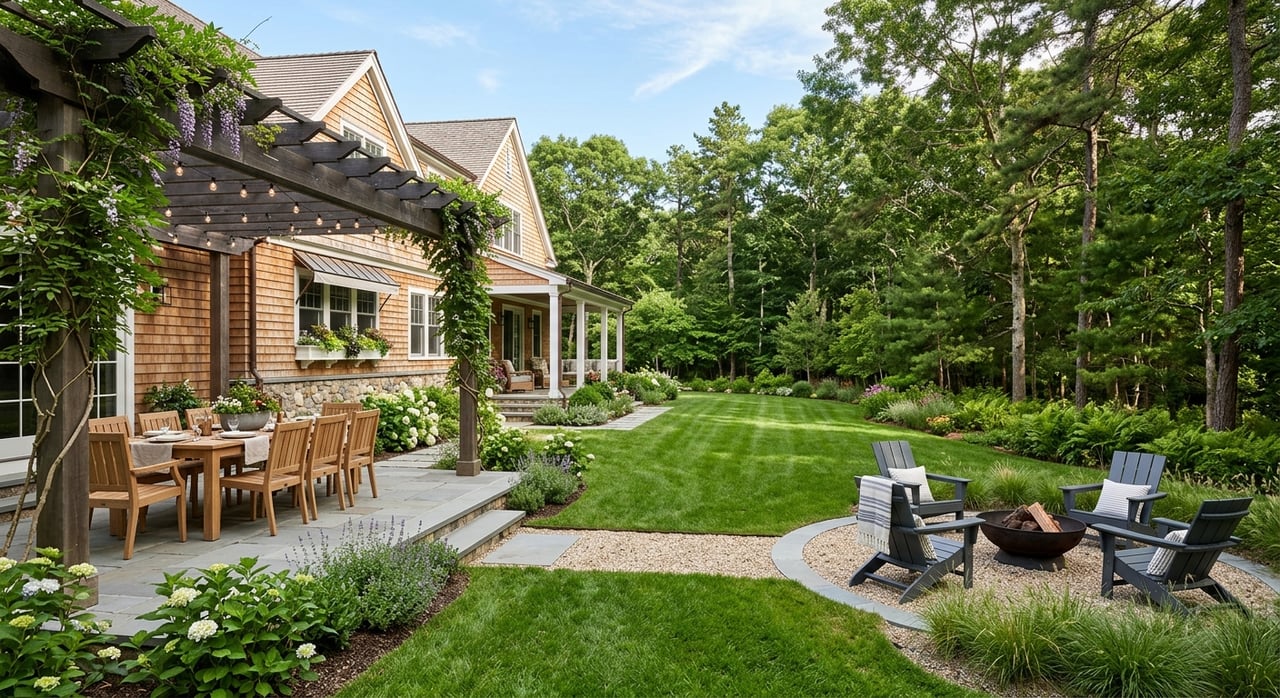
If you are looking for a village that feels calm and residential but still makes everyday errands manageable, Rye Brook stands out for that balance. You are not moving to a place built around a big downtown or a nonstop retail strip. Instead, you get a suburban setting with concentrated spots for shopping, dining, parks, and recreation that can make daily routines feel easier. Let’s dive in.
What Daily Life Feels Like
Rye Brook is, first and foremost, a residential village. According to the village’s land use and zoning plan, single-family homes make up the largest land use, while parks and open space account for 22.3% of village land area.
That matters because it shapes how the village feels when you live there. Rye Brook is not organized around a traditional downtown. The same village plan notes that convenience is present, but it is concentrated in a few commercial nodes rather than spread evenly across the community.
For many buyers, that translates into a practical kind of convenience. You can handle many routine stops nearby, while still enjoying a quieter, neighborhood-oriented setting.
Where Errands Happen in Rye Brook
Most everyday shopping in Rye Brook centers around the Bowman Avenue and South Ridge Street corridor. The village’s center planning documents identify this area as the main commercial core, which helps explain why so much of daily activity funnels here.
The biggest retail anchor is Rye Ridge Shopping Center. The center says it includes more than 70 specialty retailers, eateries, services, and professional offices, with ample free parking. Current businesses include Rye Ridge Deli, Green & Tonic, Cerbone’s Bakery, Fortina, CHOPT, Lester’s, PostNet, and Sportech.
A second key stop is Washington Park Plaza, located on South Ridge Street. Its current directory includes Acme, CVS, Rye Brook Wine & Spirit Shop, Villa Rustica, Salon la Bottega, Rye Ridge Cleaners, Dunkin, and Wells Fargo, along with 315 parking spaces.
Taken together, these two centers cover a lot of the basics. Coffee, breakfast, groceries, takeout, dry cleaning, shipping, pharmacy needs, and casual dining are all available within the village, which can simplify weekday routines.
Convenience Is Compact, Not Sprawling
One of the most useful things to understand about Rye Brook is that its convenience is compact. Rather than having shops scattered throughout the village, many daily needs are clustered in one main corridor.
That setup can be appealing if you want predictability in your day-to-day routine. You are less likely to find a continuous walkable main street experience, but you are also not far from the village’s primary retail and service areas.
This pattern reflects Rye Brook’s suburban structure. Based on the village’s land use and transportation plans, daily life here is generally convenience-oriented at the neighborhood level, with short car trips and some walkable pockets near parks and the village center.
Parks Are a Big Part of Everyday Living
Rye Brook’s park system is one of the strongest parts of its day-to-day appeal. The village’s parks, recreation, and open space plan describes five main municipal parks plus several smaller parks and athletic facilities.
That aligns with the broader land use picture. With 22.3% of village land area dedicated to parks and open space, green space is not just an extra here. It is part of how the village is organized and experienced.
If you are comparing communities, this can make a real difference. Access to walking paths, playing fields, playgrounds, and outdoor gathering spaces can shape everything from weekend plans to after-work routines.
Crawford Park and Rye Hills Park
Crawford Park is a 36-acre Town of Rye park located in Rye Brook. It includes gardens, lawns, woods, a walking and jogging path, playing fields, and the historic Crawford mansion. The village also uses the park for community events, including its annual Birthday Celebration and summer day camp.
Right next to it, Rye Hills Park adds another layer of outdoor space. The park includes a walking path, basketball court, game tables, a storytelling ring, and a belvedere for scenic views, and the village plan notes that it is reachable on foot via Crawford Park.
Together, these two parks offer a good snapshot of Rye Brook’s rhythm. You have places for active recreation, casual walks, and community events without leaving the village.
Pine Ridge Park and Active Recreation
Pine Ridge Park is described in the village plan as Rye Brook’s largest and busiest active recreational park. It includes Little League fields, basketball, tennis courts, a tennis wall, a playground, a sandbox, a walking path, bathrooms, and parking.
The park also hosts seasonal events such as Movie Night in the Park and Theater in the Park. For many residents, that kind of programming adds another layer of convenience because recreation and community events happen close to home.
If your routine includes sports, playground time, or outdoor breaks on busy days, Pine Ridge is one of the village’s key assets.
Garibaldi Park and Community Space
Garibaldi Park is another important neighborhood amenity. According to the village plan, it includes tennis, basketball, Little League baseball and softball fields, a playground, and bathrooms.
It sits opposite the Anthony J. Posillipo Community Center, which the village describes as a local hub offering social and recreational programming, transportation, and lunches for residents 55 and older, along with event rental space. This cluster adds to the sense that Rye Brook’s convenience is not only about stores, but also about access to public amenities and organized activities.
North Side Recreation Options
On the north side of the village, King Street Athletic Fields and Harkness Park expand the recreation mix. The athletic fields include turf football and soccer fields, a youth baseball and softball field, a full soccer field, a walking path, a concession stand, storage, and bathrooms.
Harkness Park adds four tennis courts and an open field. For buyers who want parks and recreation spread across different parts of the village, these facilities help round out the picture.
How Shopping and Green Space Work Together
A nice detail about Rye Brook is how commercial areas and open space often sit close to one another. Roanoke Park, for example, is next to Rye Ridge Shopping Center and serves as a passive buffer from nearby commercial uses.
That small planning detail says a lot about the village’s character. Even around convenience hubs, Rye Brook still leans residential and green rather than intensely built up.
For you, that may mean a more balanced daily experience. You can run errands, pick up lunch, or stop for coffee, then be back near open space or neighborhood streets within minutes.
Getting Around Rye Brook
Rye Brook is largely organized around road access. The village’s transportation plan identifies I-287, the Hutchinson River Parkway, Bowman Avenue, Westchester Avenue, Anderson Hill Road, King Street, Ridge Street, and Lincoln Avenue as the backbone of the local network.
The Hutchinson River Parkway has access points at Exits 28, 29, and 30. I-287 provides eastward access toward Port Chester and Rye and westward access toward Harrison and White Plains, which supports a pattern of local errands mixed with regional trips.
In plain terms, Rye Brook tends to work well for drivers. That is an important point if you are trying to picture what daily life would actually look like from home to shops to parks and beyond.
Metro-North Access Nearby
While Rye Brook itself is road-oriented, rail service is close by in neighboring communities. The village transportation plan notes that Metro-North stations in Rye and Port Chester serve as the main rail option for residents commuting to New York City.
The current MTA Port Chester station page shows that the station on the New Haven Line is accessible and includes elevators, ramps, tactile warning strips, audiovisual passenger information systems, and ticket machines. For many buyers, nearby station access adds another layer of everyday practicality, even if the village itself is not centered on rail.
Who Rye Brook May Appeal To
Rye Brook can be a strong fit if you want a suburban setting where convenience supports daily life without dominating it. The village offers concentrated retail, useful service businesses, strong park access, and practical road connections, all within a community that remains primarily residential.
It may especially appeal to buyers who value a quieter setting but still want groceries, coffee, casual dining, and recreation nearby. Instead of a downtown lifestyle, you get a more neighborhood-based version of convenience.
That distinction is worth understanding early in your home search. If you want a walkable retail district as the center of everyday life, Rye Brook may feel different from that model. But if you want a residential village with reliable convenience pockets and meaningful green space, it offers a compelling balance.
When you are exploring where to live in Westchester, details like these can help you narrow your search with more confidence. If you want guidance on how Rye Brook compares with nearby communities and what kind of home might best match your lifestyle, Tara Siegel is here to help.
FAQs
What is everyday shopping like in Rye Brook?
- Everyday shopping in Rye Brook is concentrated mainly around Rye Ridge Shopping Center and Washington Park Plaza, where you can find groceries, coffee, dining, pharmacy services, dry cleaning, shipping, and other routine errands.
Does Rye Brook have a traditional downtown area?
- No. According to the village land use plan, Rye Brook does not have a traditional downtown, but it does have a compact commercial node that serves local residents and nearby areas.
What parks are available in Rye Brook for daily use?
- Rye Brook includes Crawford Park, Rye Hills Park, Pine Ridge Park, Garibaldi Park, King Street Athletic Fields, Harkness Park, and other smaller recreational spaces, offering walking paths, fields, courts, playgrounds, and open space.
How much of Rye Brook is parks and open space?
- The village land use plan states that parks and open space make up 22.3% of Rye Brook’s land area.
Is Rye Brook convenient for commuting?
- Rye Brook is largely road-oriented, with access to I-287 and the Hutchinson River Parkway, and nearby Metro-North service in Rye and Port Chester provides an additional commuting option.
What makes Rye Brook different from other Westchester villages?
- Rye Brook offers a more residential, low-intensity suburban setting with concentrated convenience centers and a strong park network, rather than a single continuous main street or downtown environment.