Want a green, kid‑ and pet‑friendly lawn without stocking a shelf of chemicals? In Pound Ridge, that choice also protects local drinking water and supports wildlife right outside your door. You can keep grass healthy and curb pests using simple, science‑backed steps that fit our climate and local rules. Below, you’ll find what to do each season, how to navigate New York regulations, and smart lawn alternatives that thrive here. Let’s dive in.
Why low‑chemical matters in Pound Ridge
Pound Ridge sits within the Croton Reservoir watershed, which supplies drinking water to millions. Local plans encourage landscaping practices that cut fertilizer runoff and manage stormwater. Learn how your yard choices support that goal by exploring the town’s summary of the Croton Watershed Water Quality Protection Plan.
Local rules you should know
- New York’s lawn fertilizer law restricts phosphorus on established lawns. Use fertilizers with a “0” in the middle number unless a soil test shows a need, and do not fertilize lawns from Dec 1 to Apr 1. Review the state guidance on lawn fertilizer.
- New York has updated pesticide rules that limit certain systemic insecticides on turf and ornamentals. Check the NYSDEC pesticides updates before buying or applying any product.
- Pound Ridge promotes a community pledge to reduce synthetic inputs. See the town’s Healthy Yards program for local tips and resources.
Build health first: lawn care basics
Healthy soil and sturdy turf reduce weed and pest pressure. Follow Integrated Pest Management (IPM): monitor, identify problems correctly, set action thresholds, and use cultural, mechanical, and biological controls first. Cornell offers region‑specific guidance on lawn IPM.
Seasonal checklist
- Early spring
- Test soil before you buy fertilizer so you avoid unnecessary phosphorus and match nutrients to need. If you want local help, Cornell Cooperative Extension (CCE) Westchester offers sustainable lawn resources.
- Raise your mower height and sharpen blades. Follow the “one‑third rule” so you never remove more than one‑third of the grass blade. Cornell’s mowing tips explain why height matters.
- Late spring to summer
- Mow high, usually 3 to 3.5 inches for cool‑season lawns, and leave clippings to recycle nutrients.
- Water deeply and less often, about 1 inch per week including rainfall, early in the morning. See Cornell’s watering guidance.
- Overseed bare spots, address compaction with aeration where needed, and confirm pest identity before any treatment.
- Fall
- Overseed and renovate now so roots establish before winter. Mulch fallen leaves into the lawn to add organic matter and protect the soil surface.
- Winter
- Skip lawn fertilizer from Dec 1 to Apr 1, as required by New York law. Service tools, plan next year’s seeding, and schedule spring soil testing.
Smarter fertilizer and soil care
- Test first, then fertilize only if needed. Most established lawns do not need phosphorus. The middle number on the bag should read “0” unless your soil test says otherwise. See the state’s fertilizer guidance for details.
- If nitrogen is recommended, choose slow‑release sources and apply conservatively.
- Build soil with compost topdressing from yard‑waste compost rather than high‑phosphorus manures.
- Skip blanket “weed‑and‑feed” programs. Target specific issues, only when they exceed your threshold.
- For local testing and advice, explore CCE Westchester’s sustainable lawn resources.
Reduce pests without harsh chemicals
Start with IPM: adjust mowing height, watering, and traffic patterns; pull or spot‑treat weeds; and tolerate a few cosmetic imperfections. Not all “organic” products are harmless to pollinators, so always read labels and avoid restricted systemic insecticides per NYSDEC pesticide updates.
Ticks are a regional concern. Create a 3‑foot wood‑chip or gravel buffer between woods and lawn, keep play areas away from edges, reduce leaf litter, and limit rodent habitat. The CDC outlines practical, yard‑scale steps for tick‑safe landscaping.
Lawn alternatives that fit Pound Ridge
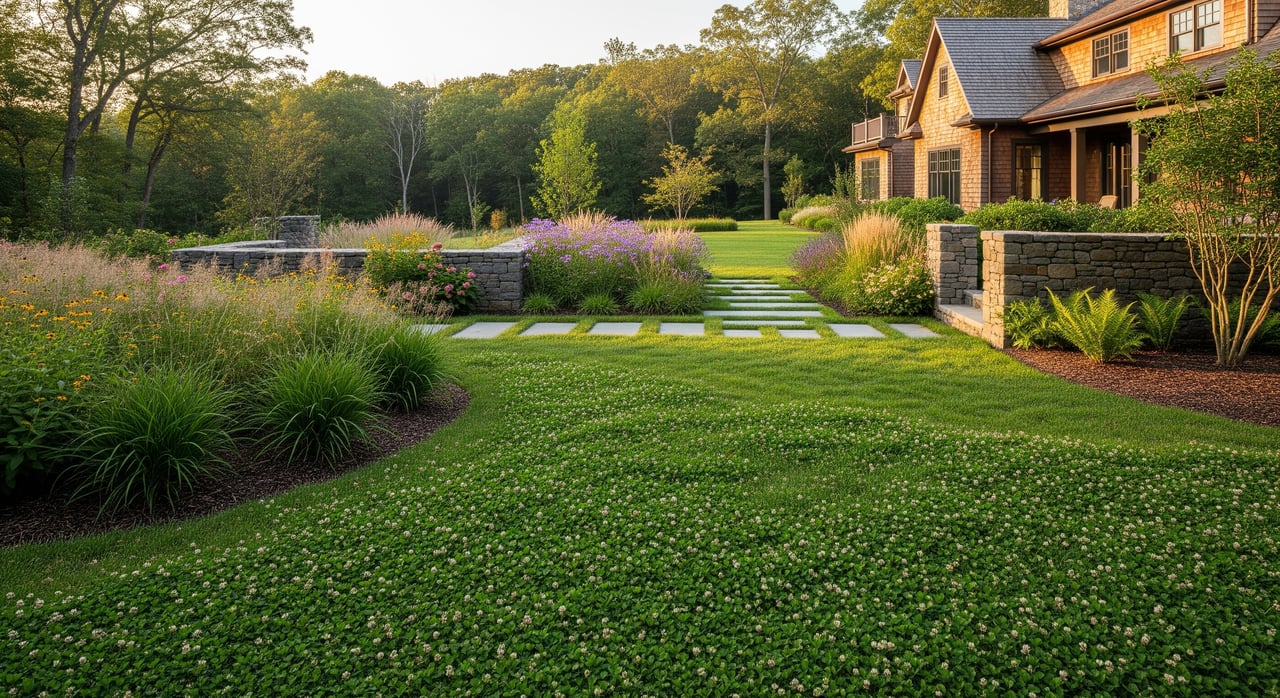
Some spaces are better as planting beds than lawn. Low‑use corners, shady patches, slopes, and areas near streams make great candidates for conversions that improve infiltration and reduce runoff to reservoirs, aligning with the Croton watershed goals.
Consider these lower‑input options:
- Fine fescue priority mixes for drier or shadier lawns that need less fertilizer and water.
- Native sedge lawns established from plugs for a soft, lawn‑like look with minimal mowing.
- Pollinator meadow strips using a mix of warm‑season grasses and native flowers for seasonal color and habitat.
- Rain gardens and buffer plantings with moisture‑tolerant natives to filter runoff before it reaches streams or reservoirs.
For plant ideas and sources, explore the regional list from Pollinate Hudson Valley and visit the Native Plant Center at SUNY WCC.
Local help and next steps
- Get localized guidance. CCE Westchester provides classes, sustainable lawn information, and help interpreting soil tests. See their sustainable lawns page.
- Join your neighbors. The town’s Healthy Yards program offers a pledge and community resources.
- Stay compliant. Confirm fertilizer timing and product labels with NYSDEC’s fertilizer guidance and check pesticide updates before using any product.
A healthy, low‑chemical yard can be a real asset when you sell and a safer, simpler landscape when you stay. If you are planning a move or prepping a property in Pound Ridge, let’s tailor a yard strategy that supports your goals. Connect with Tara Siegel to talk through your plans.
FAQs
What does New York’s fertilizer law mean for my Pound Ridge lawn?
- You should avoid phosphorus on established lawns unless a soil test shows a need, and you cannot fertilize lawns from Dec 1 to Apr 1. See the state’s lawn fertilizer guidance.
How high should I mow to reduce weeds and water use?
- Aim for 3 to 3.5 inches for most cool‑season lawns, and leave clippings to recycle nutrients. Cornell explains why height and timing matter in its mowing tips.
Are “organic” yard products automatically safe for pollinators?
- Not always. Read labels carefully and avoid restricted systemic insecticides per NYSDEC pesticide updates. Use targeted, low‑toxicity options only when needed.
How can I lower tick risk around my yard in Westchester?
- Create a 3‑foot wood‑chip or gravel barrier between woods and lawn, keep play areas away from edges, reduce leaf litter, and remove rodent habitat. The CDC’s tick‑safe landscaping tips cover the basics.